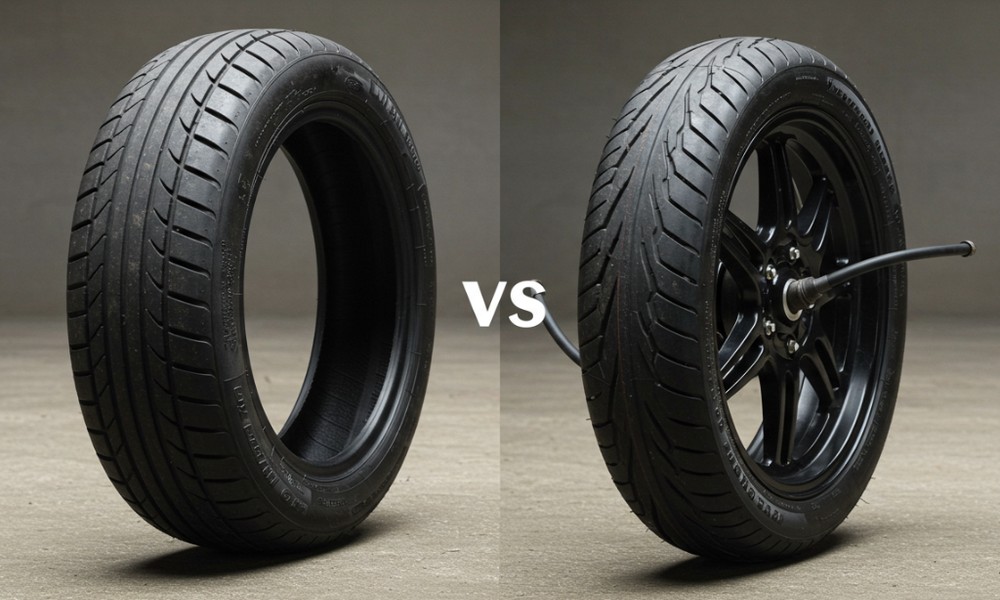
When you’re choosing new tyres, one common question is whether to go for tube-type or tubeless. Most modern bikes today come with tubeless tyres, but tube-type tyres are still used in certain situations. Understanding how these two systems differ can help you make a better decision based on your riding style and where you ride.
Construction and Design Differences
The main difference between tubeless and tube-type tyres is how they hold air. Tubeless tyres seal air directly within the tyre and rim, so they don’t need a separate inner tube. Tube-type tyres, on the other hand, use a separate tyre tube inside the tyre to hold air.
Tubeless Tyre Structure
Tubeless tyres come in two construction types:
Bias-ply Construction:
- Multiple layers of identical rubber compound
- Central dependency causes heat buildup at high speeds
- Suitable for standard riding conditions
Radial Construction:
- Independent sidewall design
- Superior heat dissipation
- Preferred for performance vehicles
The medium-thick compound used in tubeless construction provides durability and extended tyre life. The valve connects directly to the wheel rim, allowing precise air pressure control.
Tube-Type Tyre Structure
Traditional tyre tube systems consist of:
- Soft compound tyre for superior grip
- Separate inner tube holding air pressure
- Valve integrated into the tube itself
- Non-airtight wheel bonding
This separation between tube and tyre makes them compatible with spoke wheels, where spoke tension affects wheel shape on rough terrain.
Safety and Performance Comparison
One of the biggest differences between the two comes down to safety during a puncture.
Puncture Response
Tubeless Tyres:
- Gradual air loss through puncture point only
- Self-sealing capability with sealant
- Maintains control during emergencies
- Allows safe stopping distance
Tube-Type Tyres:
- Rapid deflation possible
- Air escapes between tube, tyre, and rim
- Immediate attention required
- Limited control time
Performance Benefits
Tubeless tyres excel in several performance areas:
|
Feature |
Tubeless |
Tube-Type |
|
Weight |
Lighter |
Heavier |
|
Fuel Efficiency |
Better |
Lower |
|
Heat Dissipation |
Excellent |
Limited |
|
Handling |
Superior |
Standard |
Cost and Maintenance Considerations
When it comes to maintenance, both options have their pros and cons.
Repair Requirements
Tubeless Advantages:
- On-spot repairs possible
- No dismounting necessary
- Carry simple repair kit
- Professional expertise required for major damage
Tube-Type Benefits:
- Widespread repair availability
- Simple patching process
- Rural area accessibility
- Lower repair costs
Choosing the Right System
Your riding conditions determine the ideal choice. Urban riders benefit from tubeless safety features, while remote area travellers might prefer tyre tube systems for easier repairs.
Choose Tubeless For:
Consider Tube-Type For:
Many tyre brands, including Eurogrip, offer both tubeless and tube-type options, giving riders the flexibility to choose based on their needs and riding conditions. Their range caters to quality-conscious riders seeking reliable performance whether choosing traditional tyre tube designs or modern tubeless technology.
What Works Best for You
Both tubeless and tube-type tyres have their place. Tubeless tyres are better suited for most modern riders because of their safety and convenience, especially in city and highway conditions. Tube-type tyres still make sense in certain situations, particularly where easy repairs matter more than performance. The key is to choose based on how you ride, rather than what’s more popular.